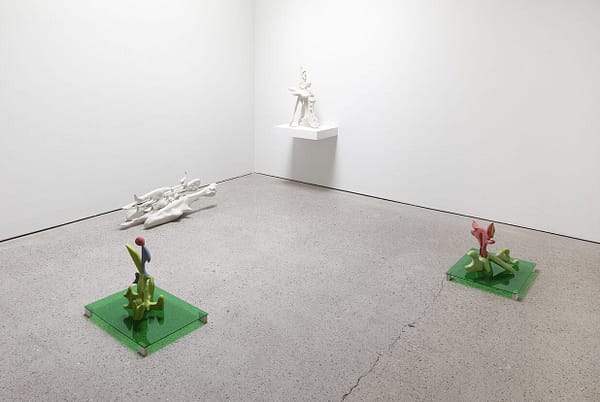
Sense and sensuality: a few words about the art of Brák Jónsdóttir
A person that works with words (a person like me) can feel a special kind of envy towards art of a more tangible sort, something made by hands and placed in the world. Words are hard to touch, they are of the mind and in the mind, they are read and subsequently come alive inside your head, not your body. It is true of course that certain very carefully selected words, placed in exactly the right order, might indeed stir something in the body, stir up a little something, might even take you to the verge of sexual fulfilment. Perhaps even, take you all the way. But then again, this might be the exception that proves the rule.
Although a phenomenon such as a sculpture can indeed be touched, it seldom is. This we know, we play along in this game. We do not dare touch the artist’s construction, recognising the raised palm crossed with a menacing red X on the gallery wall, that warns us that if we touch – we will be punished. You can look, you cannot touch. But the notion of being able to persists all the while, even though we use our senses and restrain ourselves within the museum setting, and maybe having to play by the rules, respecting the boundaries that have been set, make the game even more exciting.
Sense and sensuality are the central concepts in the Brák Jónsdóttir’s art, that explores the borders and pathways between humans and nature, the submissive and the dominant, manufactured structures and natural ones, the sexual and the cerebral.
A girl from the North
Brák Jónsdóttir is an Icelandic visual artist. She was born in 1996 in the town of Akureyri in the north of Iceland. The child of two artists, she spent her first years running up and down Listagilið, a steep hill in central Akureyri, where the town’s art museum, artist workspaces and galleries neatly line up.
Iceland as a country (as a ‘brand’) has become synonymous with nature, jagged rocks, freezing temperatures, wast oceans, towering mountains, soft moss. To associate Icelandic art, or artists, with nature is entering a danger zone, a minefield of cliche. But in Brák’s case it is inevitable, her installations exists in landscape, her sculptures are a part of an ecosystem.
In 2004 her family moved to the countryside, into Freyjulundur, an old community hall in Hörgársveit. There, Brák found her roots and formed a powerful connection with nature, that shaped her into the artist she is today. In 2011 her family founded an artist’s space and residence in Alþýðuhúsið in Siglufjörður, where Brák has also been quite active. As the artist herself has remarked: ‘Nature is unpredictable, complex and the most beautiful of all.’
In the North of Iceland, Brák’s home turf, conditions can be extreme. In winter, the sea may freeze over, the mountains become covered with layers upon layers of snow, the ominous threat of an avalanche constantly looming. In summer the heat can rise to a ‘scorching’ twenty-something degrees, tumbling up and down hills in warm waves. It is tempting to imagine that these extremes, the juxtaposition of cold and warmth, of roughness and softness, of danger and safety, are the building blocks that formulated Brák’s vision.
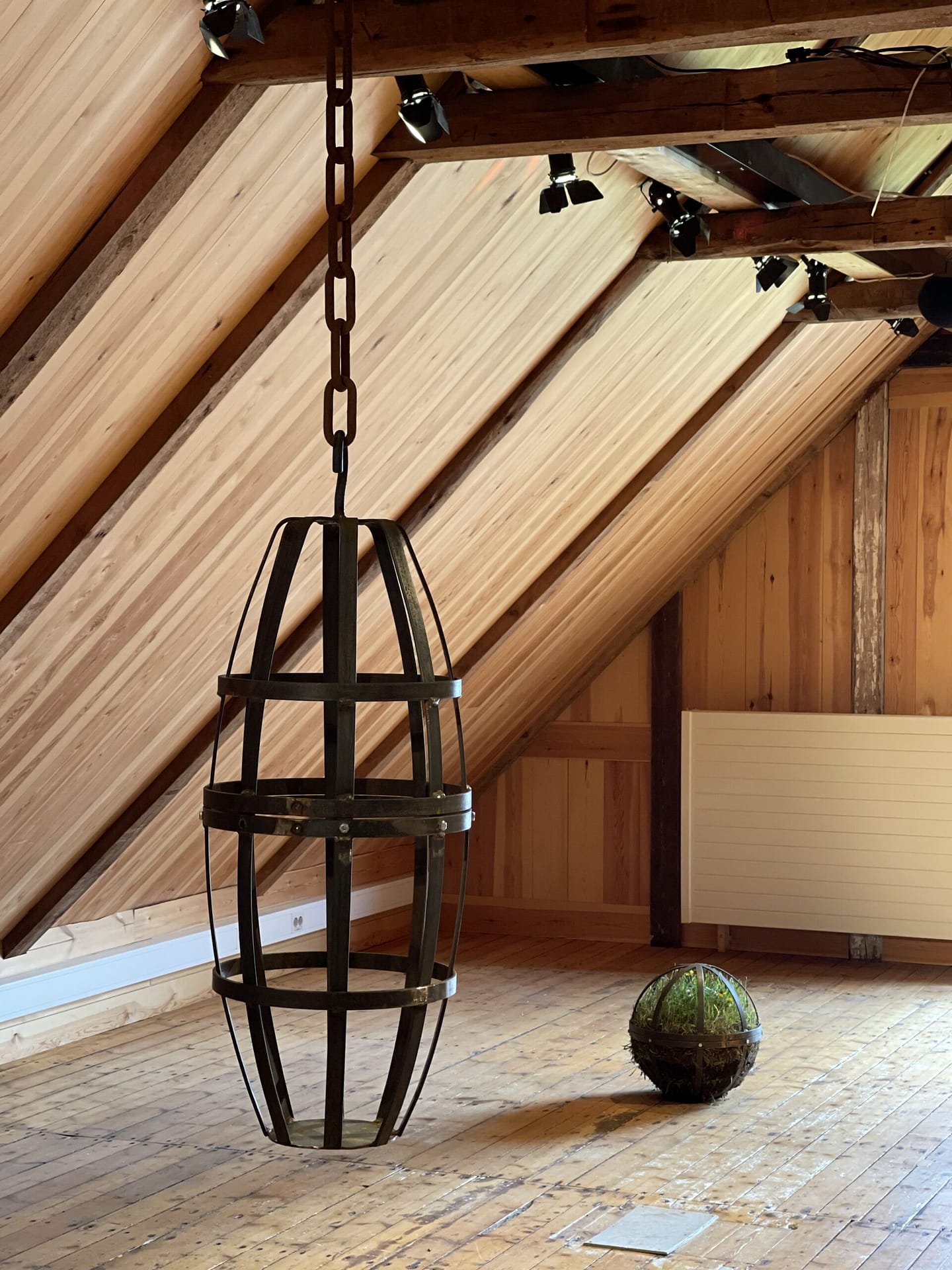
Brák Jónsdóttir, Hybrids, 2021. Steel, organic matter
Stiff wood, shiny metal, tender earth
Having established that nature is essential in her work, we might focus our attentions towards other recurring elements, like sex, playfulness and curiosity.
In 2021 Brák opened two exhibitions, ‘Hybrids’ and ‘Blushing Tension’. Both featured sculptures that pose grass and earth against shapes and materials from kink and fetish culture. Metal, shiny latex, and thick knotted ropes meet turf, hay and grass. On the floor, a plastic tubular bag, filled with sand, lies in a submissive position. It is firmly restrained with red bondage rope and seems to be waiting for something titillating to happen. Slightly ominous metal cages are suspended from the ceiling. Inside a round metal ball-like structure, a black latex balloon is filled to the brim, battling against its metal restraints, threatening to burst at any moment. A stiff wooden object, reminiscent of an artfully hand-carved chair leg (or perhaps a musical instrument?) is tightly tucked inside a deliciously green piece of turf.
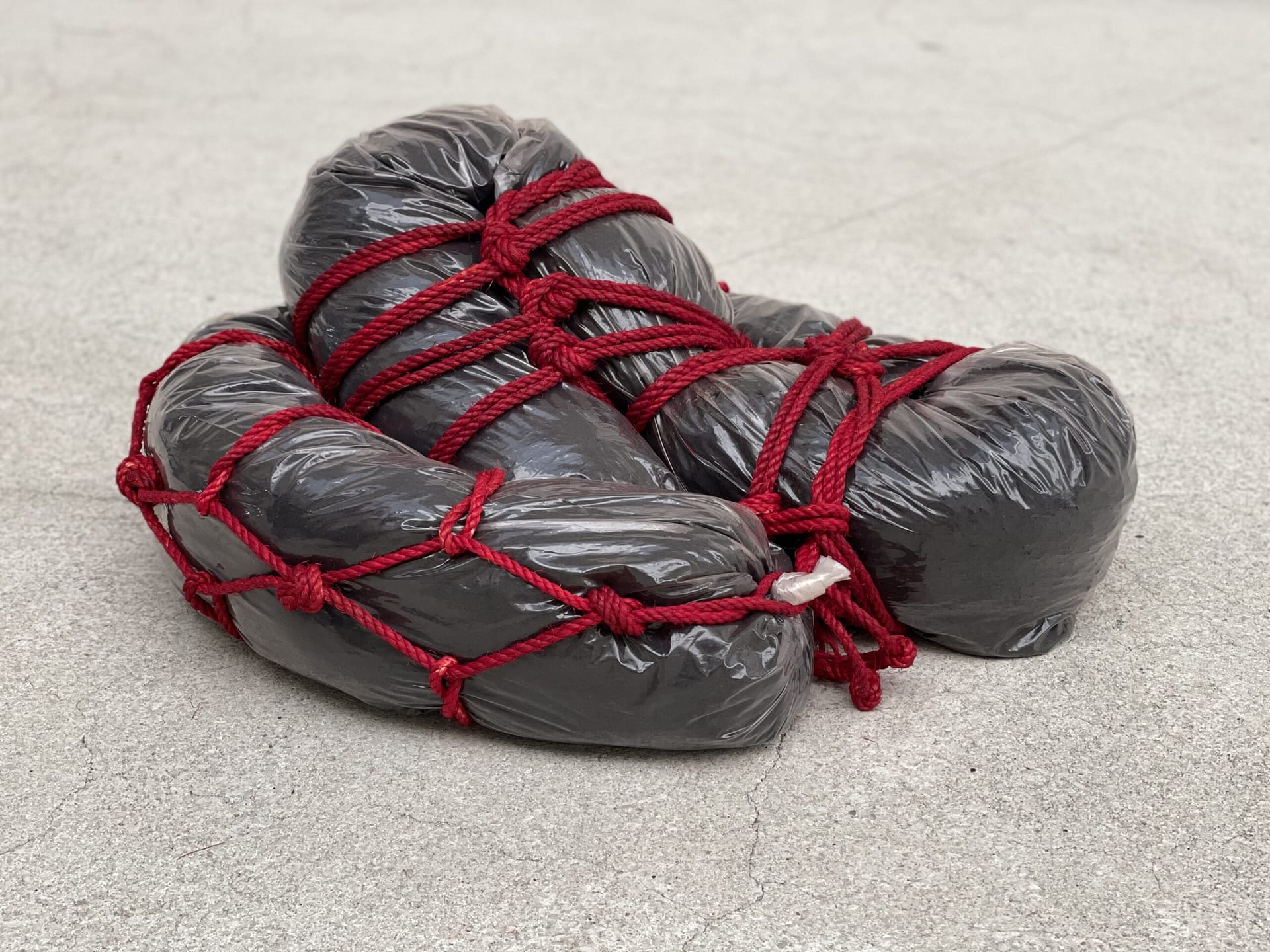
Brák Jónsdóttir, Blushing Tension, 2021. Plastic, ink, rope, organic matter
To say that these pieces are suggestive is an understatement, the sculptures practically scream with delightful erotic abundance. They are enticing, deeply sexy, but also deeply humorous and playful, looking at them inevitably puts a smile on the viewers face. But the layers of meaning don’t stop at sexual innuendo. The juxtaposition of human-made, slightly threatening industrial objects, with living pulsating grass, fibres and dirt, focuses the mind on grander subjects; our relationship with nature, which has perhaps gone astray.
The pieces are a reminder: Humans and earth are lovers. Love and pleasure can take all possible forms, there is plenty of room for pain, pleasure and thrill, as long as everyone is on equal terms. The coexistence of humans, with all their tools and technology, and nature, with all its wild and chaotic plentitude, can indeed be a beautiful one if everyone knows the rules and plays along with the game of submission and dominance. In her own words about ‘Blushing Tension’ Brák says: ‘I strive to look for a way to be at one with the world […] I want to feel the intimacy of the universe.’
Her pieces tell us something poignant about our world. They remind us of something that we might have forgotten and, perhaps, reawaken a feeling of oneness with the universe.
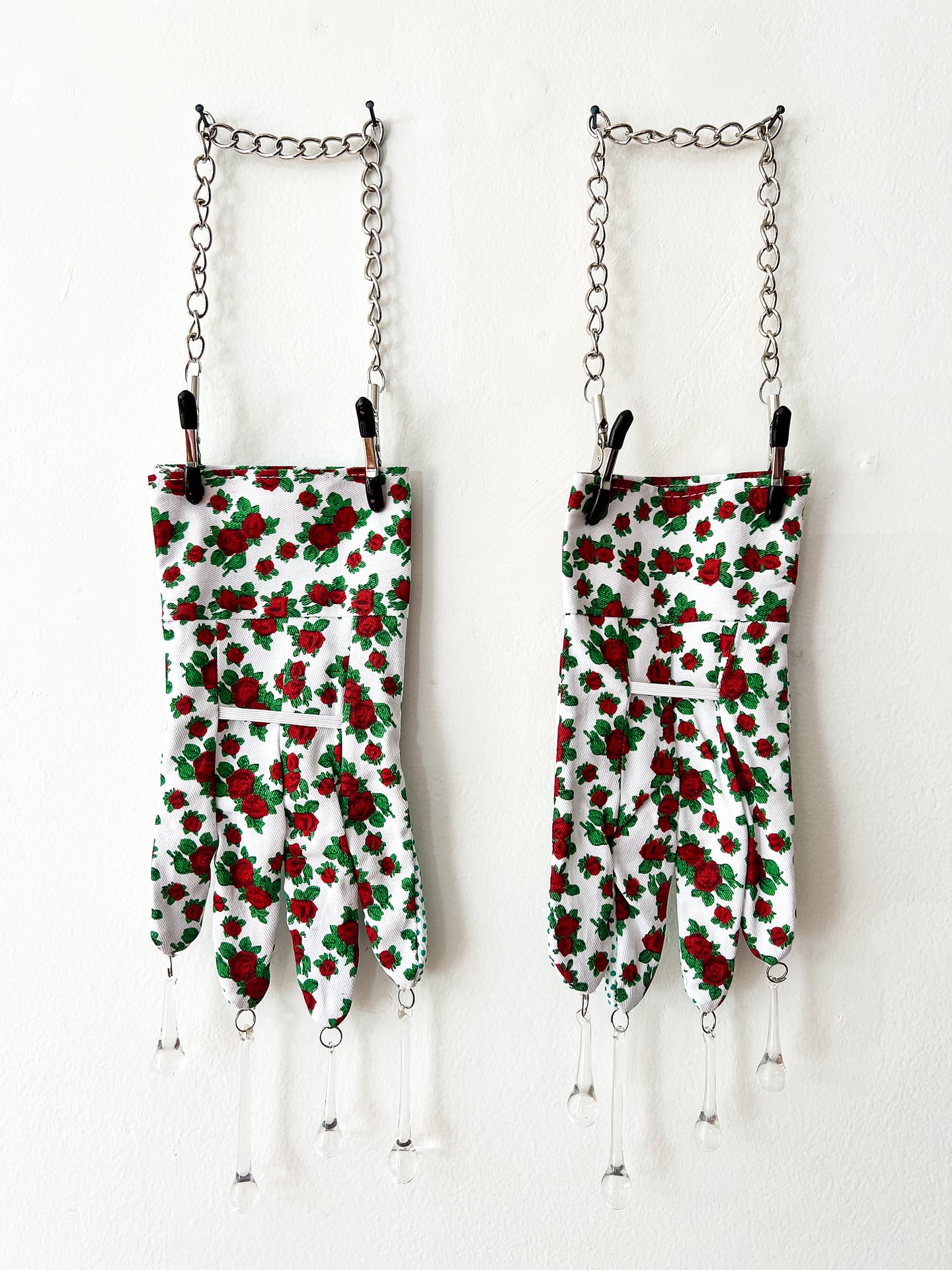
Brák Jónsdóttir, Deeper, 2022. Nip clips, gardening gloves, glass
A journey to the centre of the earth
A year later, in 2022, Brák opened the exhibition ‘Deeper’ in Ásmundarsalur, a beautiful space tucked in behind Hallgrímskirkja, Reykjavík’s most known landmark. The exhibition was on the ground floor of the building, which is also a popular café. Surrounding Ásmundarsalur is a bountiful garden and of course the artist made her presence known there as well.
I will be completely frank right now. If it was not clear up to this point, it must be said that I am a big fan of Brák’s work. I might even go so far as call myself a nr.1 fan. Out of all her tremendously exciting work, this exhibition is perhaps my favorite one. There are a few reasons for this. The first one is that I love gardening, and gardening was a major theme of ‘Deeper’. As a teenager and upwards I worked in gardening in the summers. The best job I ever had in my life was working as a gardener in Hólavallakirkjugarður, Reykjavík’s oldest cemetery. Having my hands in the dirt makes me happy, looking at flowers, knowing their names, planting them, these are ceremonies that bring me profound joy. Another reason is the delightful humour of the pieces, if there is anything that gets me going when it comes to visual art – its humour. A third reason is the unabashed and romantic aspect of the pieces.
Iceland is cold and sometimes one gets the feeling that the inhabitants are a bit cold as well. They must bundle themselves up in sweaters and puffy jackets all the time, and perhaps, somewhere in between the layers of wool and down, some sexiness gets lost. Sex and romance are private matters, public displays of affection are relatively uncommon. An exposed shoulder is a rare sight, a naked calf even rarer. Therefore, playful everyday eroticism in the public space, such as in ‘Deeper’, is a rare gift.
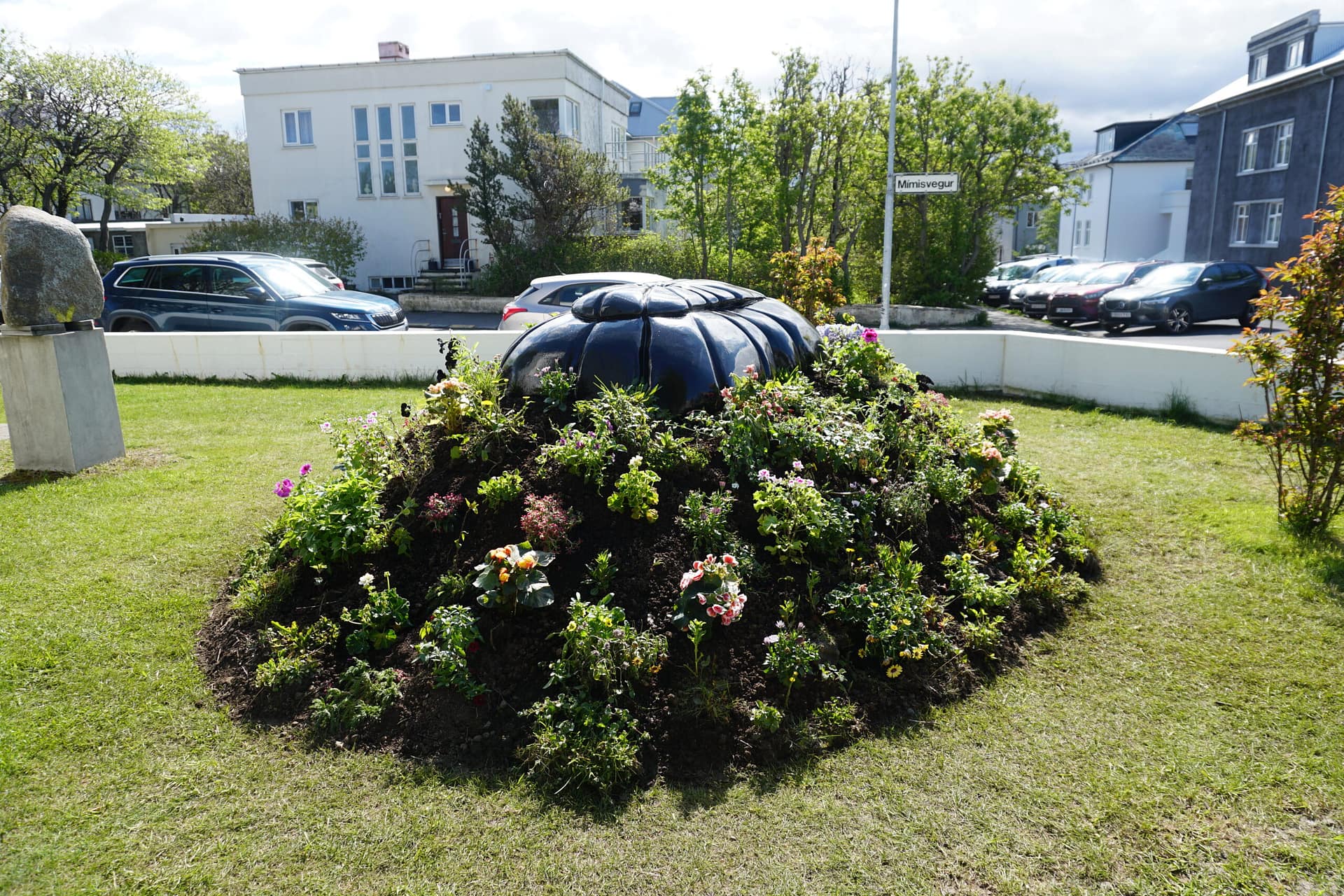
Brák Jónsdóttir, Deeper, 2022. Plastic, organic matter
Everything that truly matters to us has the ability to be sexy. For a gardener, gardening is about connection, about giving and receiving, and connection is inherently sexy. The exhibition featured objects that at first might seem like ordinary gardening equipment, but when you look closer, it is quite unusual indeed. A small shovel hangs on the wall, but the handle is missing, instead the shaft has a neat little round end, that certainly must fit… somewhere? Close by, one might find the shovel handle, but this time, the head is missing and has been replaced with a different sort of head. A beautiful pair of decorated rose-patterned gardening gloves hang from chains with little clamps at the end, perfect for a little clamping. The gardening hose has been neatly wound up after use, ready to be whipped out again whenever a dry patch might need some moistening.
Outside, in the Ásmundarsalur garden, is the main event. A glorious flowery mound bulges up from the succulent green grass and from the top of the mound a glossy black structure emerges. Perhaps it is not a structure at all, but rather a fruit of loving labour, a creature from the centre of the earth?
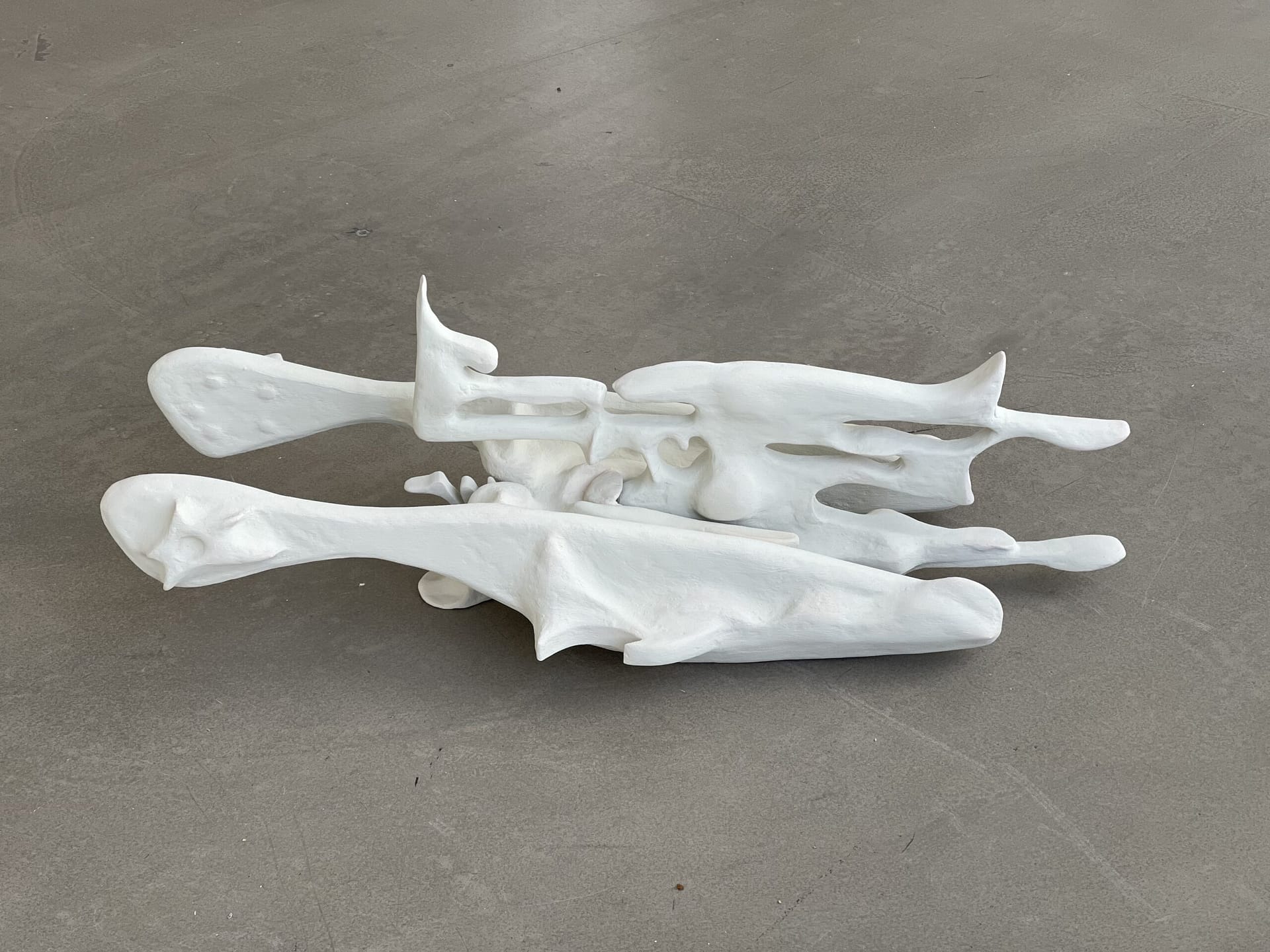
Brák Jónsdóttir, Osseous Bodies, 2023. Home-made clay, timber scraps, powder pigment. Photographer: Jussi Tiainen
Stones, funny bones and life eternal
Sometimes it might be challenging for the viewer to decide whether Brák’s pieces belong in a gallery exhibition, or in a natural history museum. They might seem somehow prehistoric, or perhaps the exact opposite, like something from a distant future.
2023 was a big year for Brák, exhibiting multiple works in a number of venues. One of them was a sculpture called Turritopsis 2.0. This mouthful of a name is actually the name of species of jellyfish, the Turritopsis dohrnii, that has also been dubbed ‘the immortal jellyfish’. Unique in the animal kingdom, the immortal jellyfish has the ability to reverse its life cycle.
‘Like most other hydrozoans, T. dohrnii begin their lives as tiny, free-swimming larvae known as planulae. As a planula settles down, it gives rise to a colony of polyps that are attached to the sea floor. All the polyps and jellyfish arising from a single planula are genetically identical clones. The polyps form into an extensively branched form, which is not commonly seen in most jellyfish. Jellyfish, also known as medusae, then bud off these polyps and continue their life in a free-swimming form, eventually becoming sexually mature. When sexually mature, they are known to prey on other jellyfish species at a rapid pace. If the T. dohrnii jellyfish is exposed to environmental stress, physical assault, or is sick or old, it can revert to the polyp stage.’ (Wikipedia)
Brák’s Turritopsis 2.0 indeed looks like a jellyfish. But it is also evident, as the title suggests, that it is an enhanced version – an upgraded 2.0. To suggest that there could be an upgrade to such miraculous creature, that some believe holds the key to eternal life, shows just how far Brák’s imagination and creativity can reach.
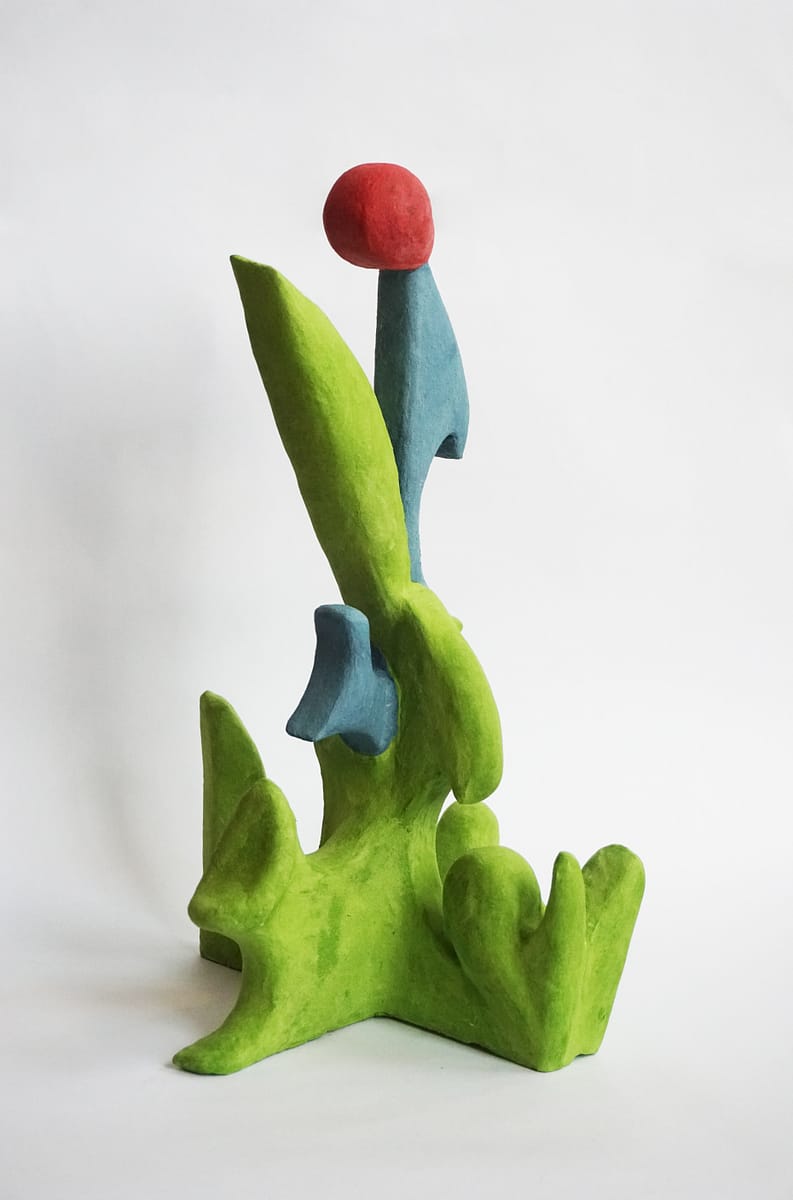
Brák Jónsdóttir, Osseous Bodies, 2023. Home-made clay, timber scraps, powder pigment
Turritopsis 2.0 is quite a large sculpture, both literally and figuratively. The exhibition ‘Osseous Bodies’, which opened in the same year, featured very different pieces. Smaller and more delicate, the sculptures resemble skeletons of mysterious creatures. Immediately one starts to ponder the fully fleshed out versions of these creatures. Where does the head go? Is that a tail? There are no straight answers to these wonderings, the creatures are perhaps not even of this earth and their anatomy is probably beyond our human understanding.
As it says in a text Anna Reutinger wrote about ‘Osseous Bodies’, Brák was inspired by the phenomena of ‘whalefall’, when creating the pieces. Whalefall happens when a whale dies and sinks slowly to the bottom of the ocean, becoming a host for a diversity of other lifeforms, some of which exist in no other place on earth. Like all truly splendid art, the skeleton sculptures focus the viewers mind on something that they might not focus on otherwise, for example the simple fact that bones are living tissue. Bones have an inorganic quality, they are so hard and angular, and might seem more like rocks. In proper circumstances they can indeed become stone, and then we call them fossils. But bones are as living, kicking and screaming as the rest of the body, at least while we’re alive. Then, when the spirit leaves the body, the skeleton is what’s left for longest and if conditions are right, is might be the only part of us bound for eternal existence.
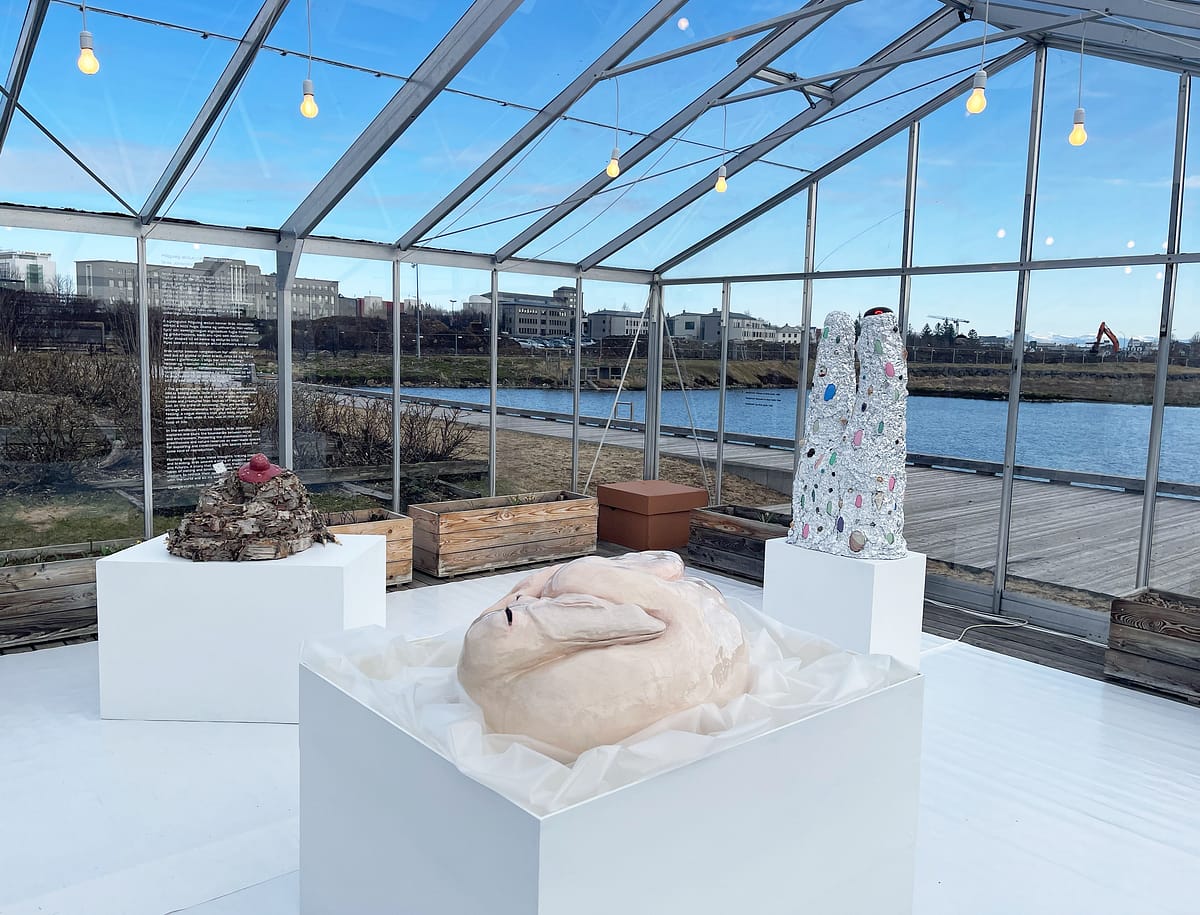
Brák Jónsdóttir, Possible Oddkin, 2023. Installation view, mixed media
The story continues
Sadly we humans, as well as all of flora and fauna, are not as lucky as the Turritopsis dohrnii to be gifted an eternal life. Our lives are finite and that is what makes them precious. Our only possible bypass of this fact of existence is reproduction, a way to pass on a part of ourselves (our genes, our memories) on to the next generation. In a striking installation in a greenhouse by the Nordic House in Reykjavík, Brák pondered the poetic and slightly nauseating subject of the circle of life. The exhibition was called ‘Possible Oddkin’ (Möguleg æxlun).
The Nordic House is a Reykjavík landmark, situated in Vatnsmýri. The building is a thing of beauty, designed by the legendary Alvar Aalto. In front of the Nordic House is a lovely garden, as well as a pond and a bird sanctuary. The greenhouse in the garden served as the location for the exhibition and the pieces indeed seemed like something the artist might have found laying around in some sort of a dream version of Vatnsmýri.
A retro-futuristic two-pronged structure, made from aluminium foil, is perhaps what first captures ones attention. Inserted into the structure are small precious things, colourful bars of soap, shiny shells, broaches and stones. On top the structure is a bright red incubator lamp that perhaps holds the key to unravelling the meaning of the pieces. In the middle of the greenhouse lies the biggest and perhaps the most striking sculpture, a birdlike creature with a soft peaceful expression on its face. The bird is curled up in an egg-shaped position and we realise that what we are seeing is a ‘sneak peek’.
The artist has been so generous as to peel back the eggshell and reveal to viewers an individual on the cusp of existence, not quite ready to be born in to this world, but almost ready. The creature seems excited about this, about what lies ahead. On a platform next to it is a mysterious entity, a neat bark-covered mound, with a perky nipple on top.
It is a true pleasure connecting the dots in this exhibition, especially because the dots form a circle that goes around and around. The greenhouse is an incubator, not only for life but for art, because life is art and art is life, Vatnsmýri itself is an incubator, our Earth is an incubator feeding us and feeding off of us, forever into the distant future.
It is fitting that for this wonderful show, Brák won the Motivational Award at the prestigious Icelandic Art Prize ceremony in 2024. The award is given to an artist certain to make waves in the future. In the jury’s statement it said:
Both in the artworks and the curator’s text there is a sense of humour as well as more serious musings about the connection between body, soul and environment. The placement of the works in the Nordic House’s Greenhouse also plays a pivotal role in Brák’s installation. In her choice of location, she directly references human-made environments that create prime conditions for sowing, nourishing, nurturing and growth.
The jury finds that Brák’s sculptures and her performative connection with many of them brings an interesting quality to the visual arts. They fuse many of the more pressing contemporary questions about the connection between human and nature, growth processes, and the role of imagination in creating realities at the conjunction of the possible and impossible.
The works are intriguing, igniting many of the body capsule’s centres, which induce challenging and pleasant emotional reactions. The works also distinctly mirror Brák’s sharp ideological vision, as she has created an intriguing well of possibilities early in her career, which will continue to develop in interesting ways.
I believe it is fitting to end this short text on this note. Looking towards the future, which for Brák Jónsdóttir, is certainly bright. The world is her oyster, and she is a glistening pearl.
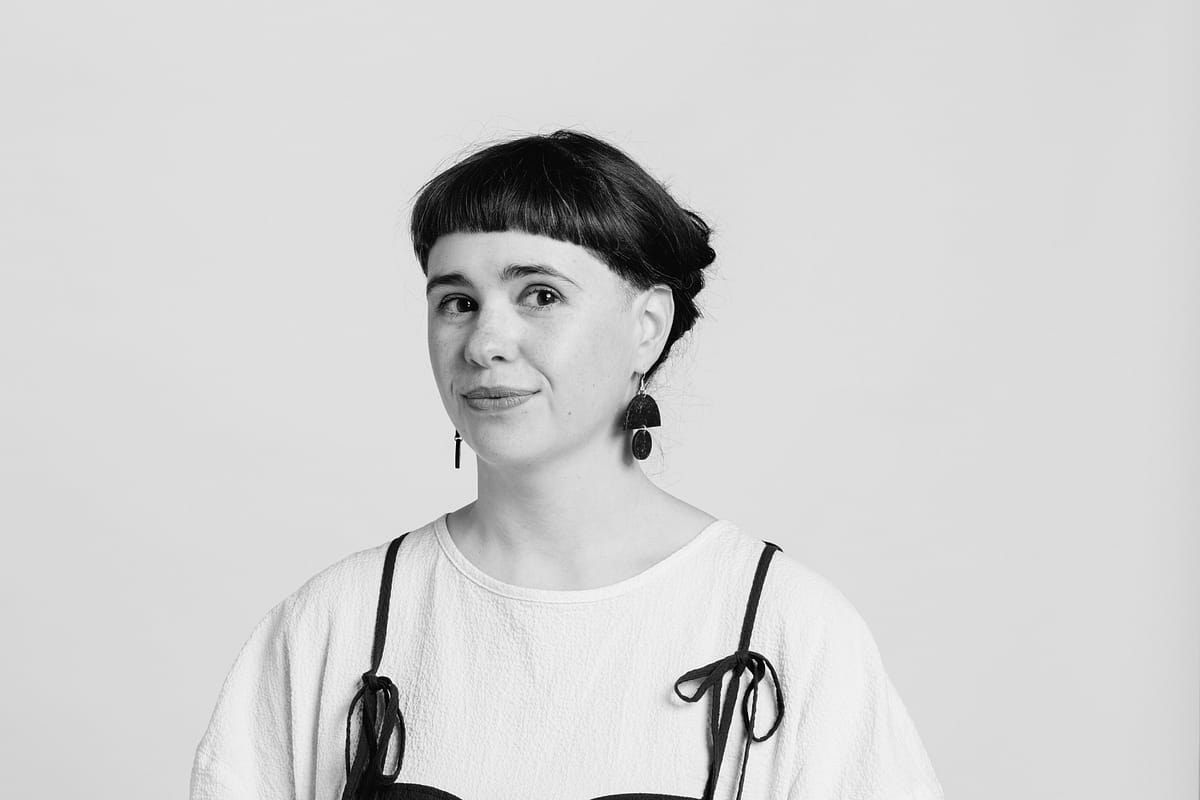
Photographer: Sigurjón Ragnar
Brynja Hjálmsdóttir is a poet, author and critic from Iceland. Her poetry, composed of surrealist imagery and rhythmic language, addresses diverse subjects and often draws from the absurd and grotesque. She has received multiple literary awards and nominations for her work, and has been described as by critics as “One of Iceland’s finest young writers”. Her second book of poetry, A Woman Looks Over Her Shoulder, is out now in the United Stated, translated to English by Rachel Britton. Brynja’s first novel, Friðsemd, came out in 2024.